|
Various experiments I have tried out while learning 6510 machine language.
|
|
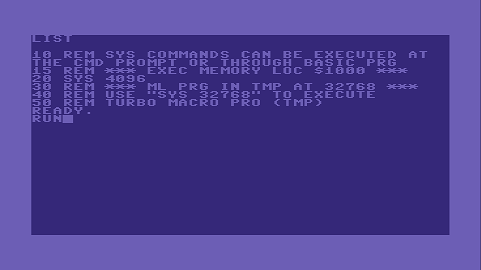
The POKE command pushes an 8-bit number to a memory location from BASIC. In 6510 machine language this is done loading one of the CPU's registers using the LDA, LDX, or LDY instructions and then calling the corresponding store instructions STA, STX, or STY.
|
|
|
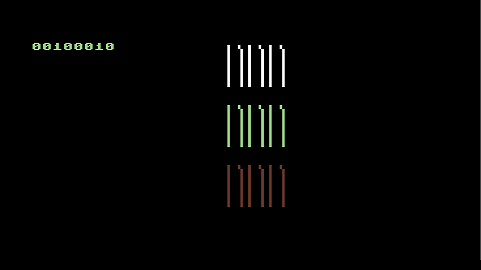
Sprites are defined by 8-bit numbers. The bits of that number control whether or not a pixel is on or off. BitPatterns shows the bits of the 8-bit number and then 3 sprites in different colors showing that pattern. The machine language version also shows the hexadecimal and decimal representations of the binary number as well.
|
|
|
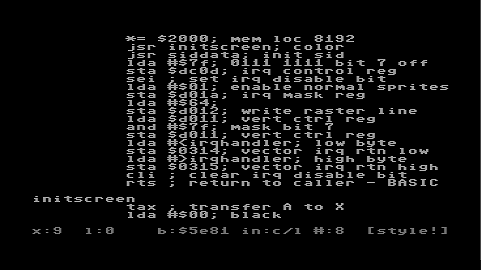
NirvanaSID plays a SID file from the raster interupt while not affecting BASIC so it appears to be running in the background which is similar to running something in a thread on modern programming and processors.
|
|
|
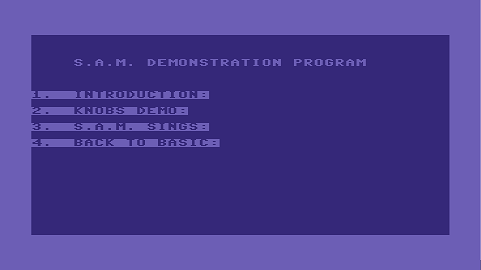
S.A.M. is a text to speech engine released in 1982 wrote by Mark Barton that can be used from BASIC or machine language to add speech to your own programs.
|
|
|
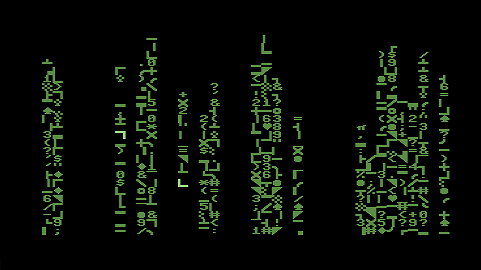
I happened across a youtube video of a matrix like effect wrote in BASIC and decided to translate it to 6510 machine language mainly to see how much faster it would run. Later on I modified the default character set to help make it look more matrix like, along with some music and a raster bar.
|
|
|
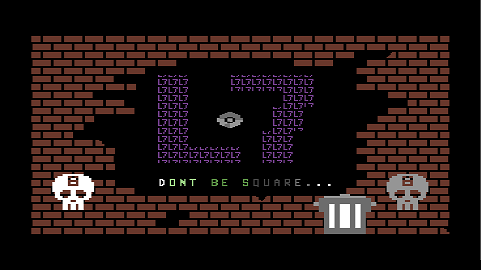
Rotating character bytes and sine wave sprite movement. A few sprites move with the SID chips 3rd control register when certain bits are on. There is also a color wave effect on the text.
|
|
|
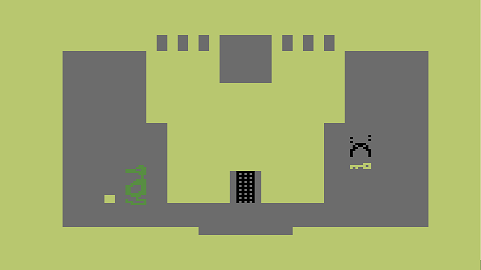
Experimented with the online PETSCII editor to generate a 6510 machine language program that contained graphics from the Atari 2600 game Adventure.
|
|
|
|